Happy holidays everyone (Australia - sorry USA friends)! My holidays officially started today as I have been at professional development for the past two days. I'm very lucky as the region that I work in has great PD opportunities consistently for us to learn, develop and reinforce our skills.
Two weeks ago I was very fortunate to attend Explicit Instruction which was presented by Dr Anita Archer. I'm sure most of my American friends would of heard about her work. I hadn't heard of DR Archer until our new principal gave us all a copy of her book. This has some amazing ideas. It was very easy to implement as our region's major lesson format focus at the moment is I do, We do, You do. Click on Anita's book to take you to her website. She has numerous videos for lower and upper primary demonstrating explicit instruction.
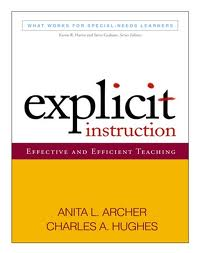
There is also a sample chapter on the home page. Truly, this is a must read.
Here is where I have been for the past two days.

If you haven't heard of the First Steps program you MUST find out now! First Steps was first written in WA but is now used mainly Australia wide. It is a developmental program written for literacy and mathematics. The literacy program materials are made up of four interwoven strands of literacy: Reading, Writing, Speaking and Listening, and Viewing, which symbolise the interrelatedness of literacy learning. All strands are threaded with practical, accessible, classroom-tested teaching procedures and activities.
The mathematics program is a series of teacher resource books that is organised around sets of mathematics outcomes for Number, Measurement, Space, and Chance and Data. The series will help teachers to diagnose, plan, implement and judge the effectiveness of the learning experiences they provide for students. I was lucky enough to be included in the two day measurement program.
Here is some of what we covered -
Understand Units
Decide what needs to be measured by selecting what attributes to measure and what units to use.
Direct Measure
Carry out measurements of length, capacity/volume, mass, area, time and angle to needed levels of accuracy.
Indirect Measure
Select, interpret and combine measurements, measurement relationships and formulae to determine other measures indirectly.
Estimate
Make sensible direct and indirect estimates of quantities and be alert to the reasonableness of measurements and results.
The great part about these two days was that the course was very hands on with lots of interactive and engaging activities.

Here we had to organise clocks form the easiest to the most difficult to interpret.

In this activity, we had to estimate which cup would have the great capacity. This was quite interesting as we found most younger children believe that the tallest will hold the most.
This was a very valuable PD as I gained a lot of new knowledge about measurement. When you attend these workshops you get the measurement books and the course book to keep. For those of you who are wanting to find out more or to get a copy of these very valuable books fear not. The First Steps program could only be attained if you went to a PD or bought the books online. The good news is that you can now get all of the literacy and mathematics books for FREE!

Click on the First Steps picture to take you to the link for all of the text.
Now off to enjoy my holidays, I think I hear the nail salon calling my name.


